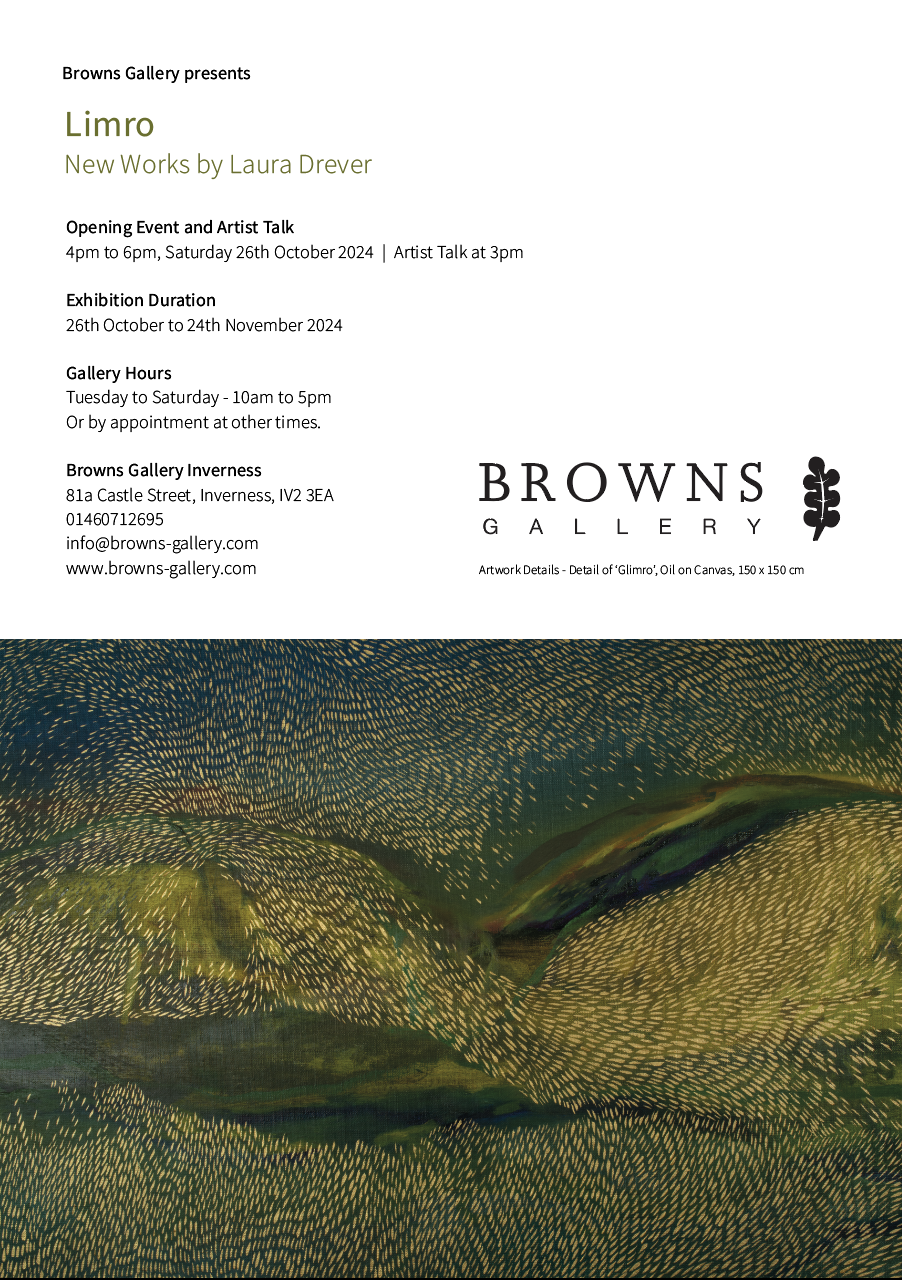
Limro has been on the walls of Browns Gallery for a couple of weeks now and the response has been very humbling. For me, there are a few reasons for this:
The messages received from folk are always welcomed.
Working as an artist can often mean a lot of time by yourself, in your own thoughts for long periods of time. When it is time to exhibit, it requires you to open up and be visible, share your process. For me – and I’m sure for other artists – this takes a bit of thinking. Not sure it ever gets easier but it does get more interesting. Hearing how people feel, what they see and how the artwork has allowed time to stop for a bit and reflect on the landscape around them – the landscape on the walls but also the landscapes where they live. I’d love for my work to inspire people to get out walking, to look closer, to take a moment for themselves.
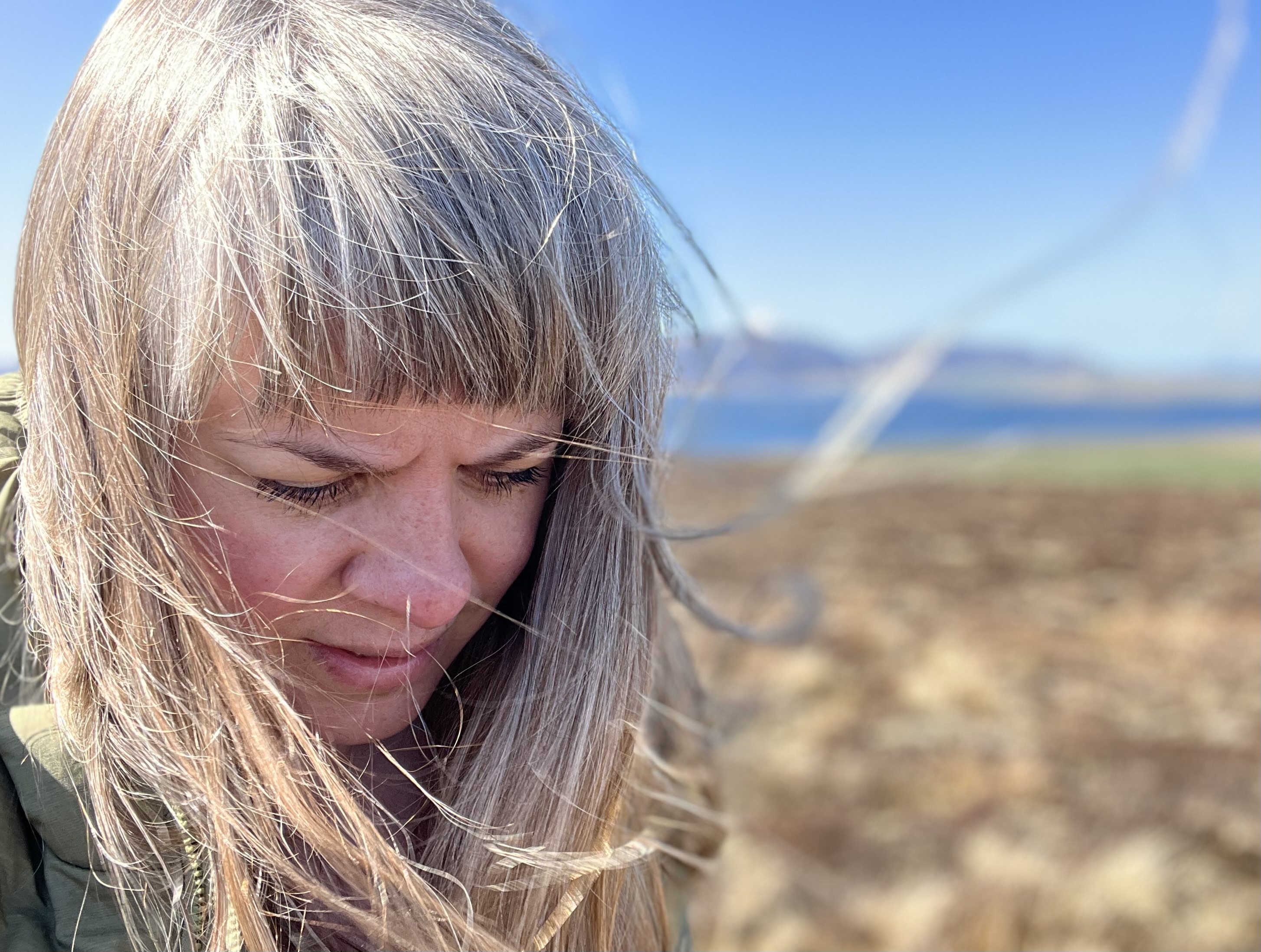
Exhibiting outwith Orkney feels like a big deal.
Bringing artwork to new audiences is a wonderful thing.
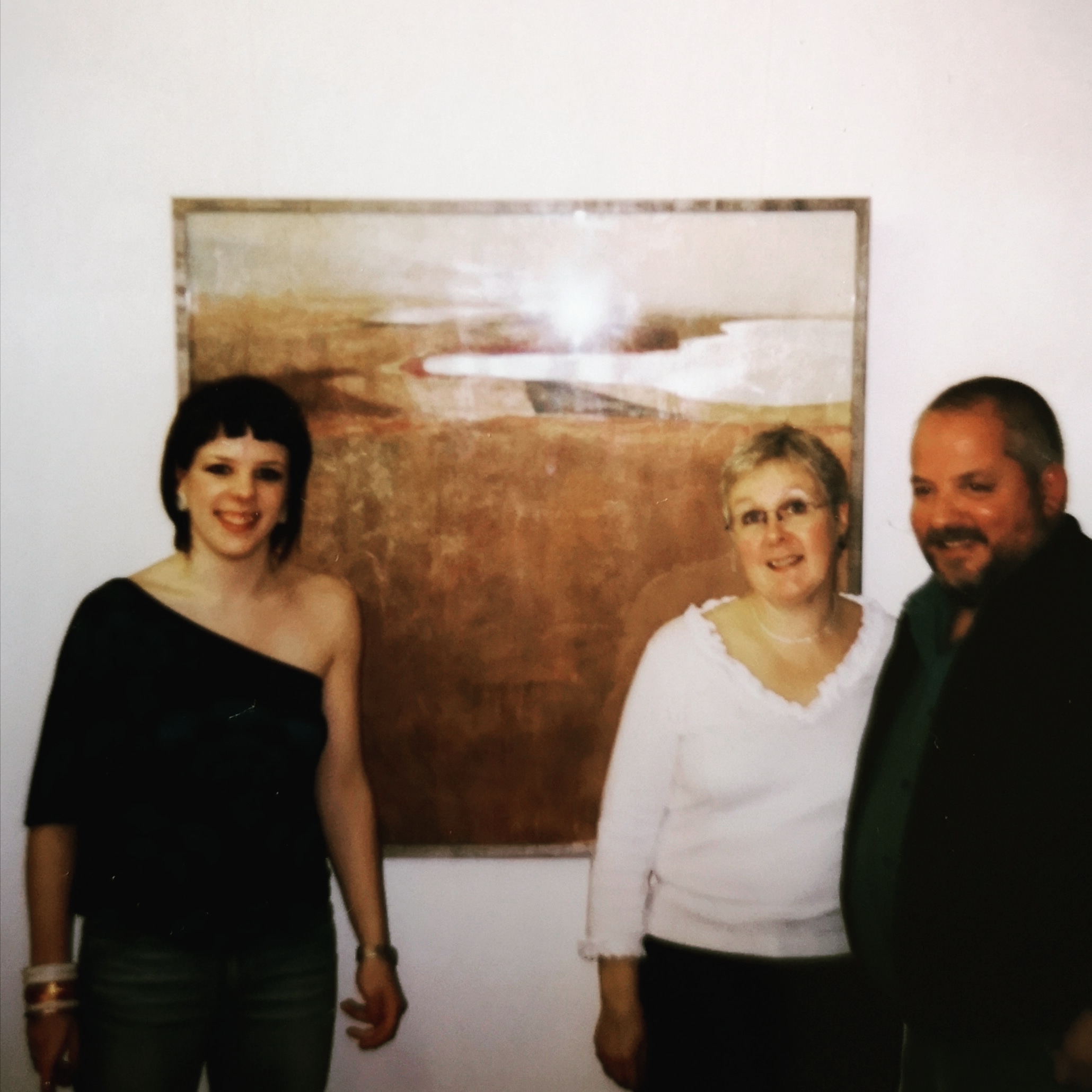
My first solo exhibition Place was in 2002 at the Orkney Gallery (no longer here) family and friends were the viewers. No online presence. I think it was hung by myself with the support of Malcolm who owned the space, we invited folk along by posting printed invites that had been designed inhouse. We welcomed folk with a glass of wine and then partied afterwards. It was a big deal. An undergraduate preparing – thinking back, I think it was a way of trying to earn some money to pay for my final year at ECA. It was well supported and enabled the artwork that followed.
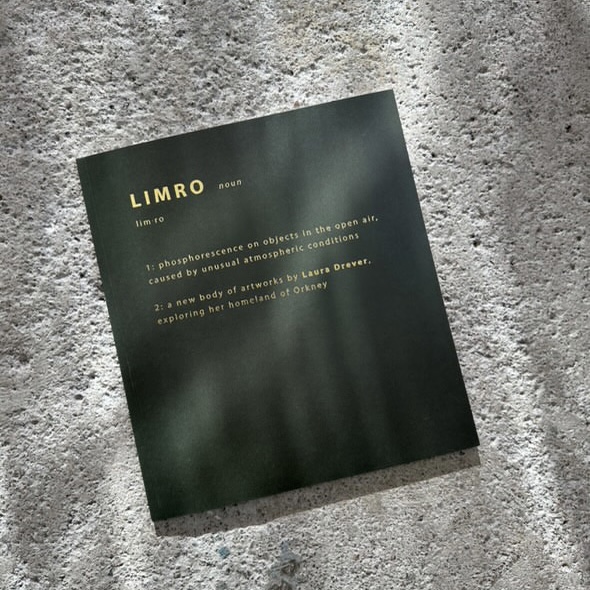
Fast forward to Limro. A new collection made for Brown’s Gallery in Inverness. A gallery a bit further ‘South’, across the water. Being well versed in sending artwork outwith Orkney, the new collection was packaged up and delivered to Browns to get framed before being hung in their Gallery in Inverness. The first time I saw it again was on the walls, catalogues printed and all the behind the scenes activity professionally and thoughtfully done. A new audience where the artwork can be viewed in person and online. It is a big deal.
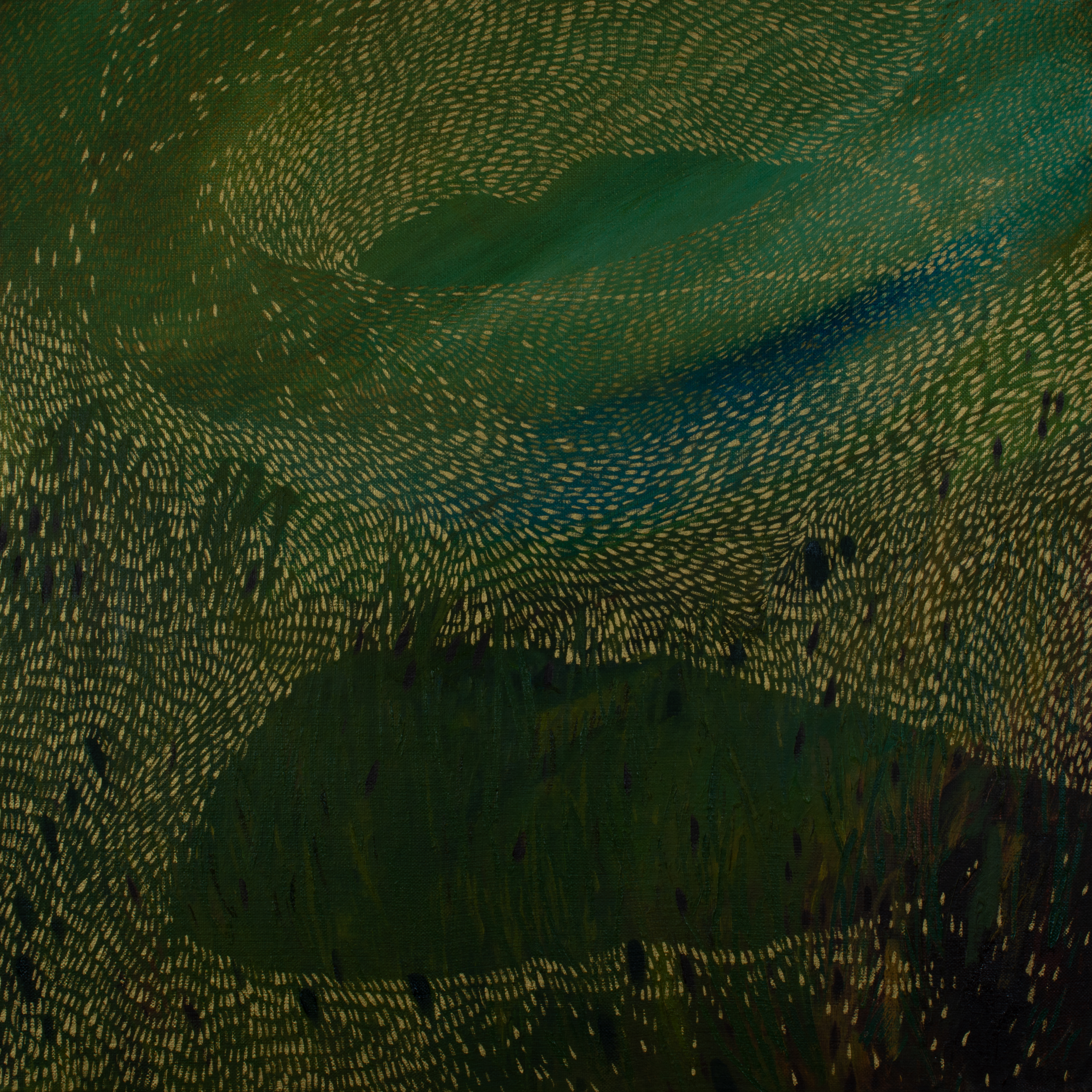
Being supported to be a practicing artist is quite an amazing thing.
The decision to dedicate my creative practice to Orkney was made when I was a young adult (or maybe I was still a child at 17 years old). I remember the day – while in my first year at Edinburgh College of Art, I was questioned about what I was doing and why. My answer was brief and probably pretty dumb (or not academic enough) but it was an answer and I meant it. “I paint Orkney because I want people to see the things that make it special. I’d like people to enjoy my artwork“.
Being born and brought up in Orkney, living and working here all my life (apart from when studying) has allowed me to get to know the landscape over and over again, to learn about its history, its stories. How it changes from day to day, season to season. The effect the weather has and how the light can make it look brand new again. It is a cycle that has taken to me where I am today. I intend to carry on walking, revisiting and exploring.
Carol Dunbar – colleague and friend – kindly put pen to paper ahead of Limro. A personal reflection…
As late summer gales start to whip and dance through ripening barley and the season’s last cuts of silage leave momentary stripes of lush green across butter-yellow fields, it is hard not to see the Orkney landscape through the lens of an artist.
But it requires a very acute and attuned eye to capture its essence and the sensation of being immersed and surrounded by it and express this in visual terms. For Laura Drever, it is precisely this experience and the ever-changing rhythms of the landscape that she sets out to capture in her work. Firstly, through sketches and observations honed through years of regular walks, recording the many changes in physical terrain as well as the pattern of weather, colour, and birds in flight. All this she takes back to her studio where she begins the process of reflection, reworking and reassembling.
I first saw Laura’s paintings at Edinburgh College of Art in her degree show in 2003 and over some twenty plus years, both as a friend and as an admirer of her work, have witnessed with high regard her growth and development as an artist.
In those decades though, some things have not changed, her work is still underpinned by her passion for and knowledge of the Orkney landscape and its natural history, and at its core is a deep-seated desire to utilise paint itself, to explore and express something more profound and unseen, beyond the literal and representational.
I have always been struck by this constancy in her work: the familiarity and certainty of a place (though never sensed the same way twice); the inevitable surety of changing light and motion; the interruption and disruption of fleeting weather, the seasons, the natural world and human intervention.
What has evolved however, is the depth and complexity of her artwork. In the larger oil canvases, where colour and movement are heightened to dramatic effect, creating a powerful tension between the abstract and the recognisable elements of the work. In smaller works, the drama is set out by presenting groups of intimate paintings together, with the movement and shift of line and pattern flowing and threading through one work to the other.
Laura’s commitment to her work has, through time, experience and hard graft resulted in an astonishing display of new work for Limro. All the more remarkable since it is only two years since her last major exhibition, held at the Pier Arts Centre, Stromness in 2022.
She follows in a strong tradition of Orcadian landscape artists, prominent among them Stanley Cursiter (1887-1976) and Ian MacInnes, (1922-2003) but her work has its deepest affinity with that of Sylvia Wishart (1936-2008), a fellow Orcadian, and Wilhelmina Barns-Graham (1912-2004), who made several working trips to Orkney in the mid-1980s.
When I look at Laura’s work, I can see the parallels with Wishart and Barns-Graham: the re-treading of known territory; the distillation of visual information to the essential, the repetition of motifs, the sweeping gestures coupled with precise and intuitive mark making.
Like Wishart before her, Laura’s practice is to take her notes back to the studio and ‘improvise’, bringing the known elements together in many and often deceptively differing configurations. Glimro, for example, has all the drama of a late Wishart, as does Kraa, but each has a distinctive ‘language’ and ‘tempo’ that is uniquely Laura’s.
The more linear qualities of Ebb and Abuin echo Barns-Graham in their fluidity and spontaneity and as Laura’s work matures, I’m sensing a growing empathy with Bet Low (1924-2007), another Scottish artist with strong Orkney links, especially with Hoy and perhaps too, to elements of the work of Winifred Nicholson (1893-1981).
In her own individual way, Laura brings a contemporary edge to the legacy of these distinguished women artists. There is a luminosity, a quality of shifting light, caught in the moment. There is an ambiguous relationship between depth and flatness, articulated by reference to a horizon, for example Tangie, Noust and Kuil amongst many others. Yet it is often no more than a simple stripe that plays with our sense of the picture plane and distorts our expectation of distance.
It is testament to Laura’s endeavours as an artist who continues to pursue the possibilities of a traditional medium, that she is one of the artists invited to be part of Frontiers, Painting in Scotland Now, a major exhibition curated by the Royal Scottish Academy in Edinburgh, that considers the place of painting in contemporary Scottish art.
In conclusion, I return to certainty and constancy, and Laura herself and her presence within Orkney’s wider community. Her success as an artist is not achieved at the expense of disregarding the events of everyday life. In fact, the opposite is true, her practice is part of an extraordinary whole, that involves not only dedication to her own work, but is equally informed by a sense of herself acquired through her commitment to supporting and encouraging others to take part in creative activity and artmaking. It is this sureness and dependability, that mark her out as a remarkable individual and an exceptional artist and someone whom we are all much the richer for knowing.
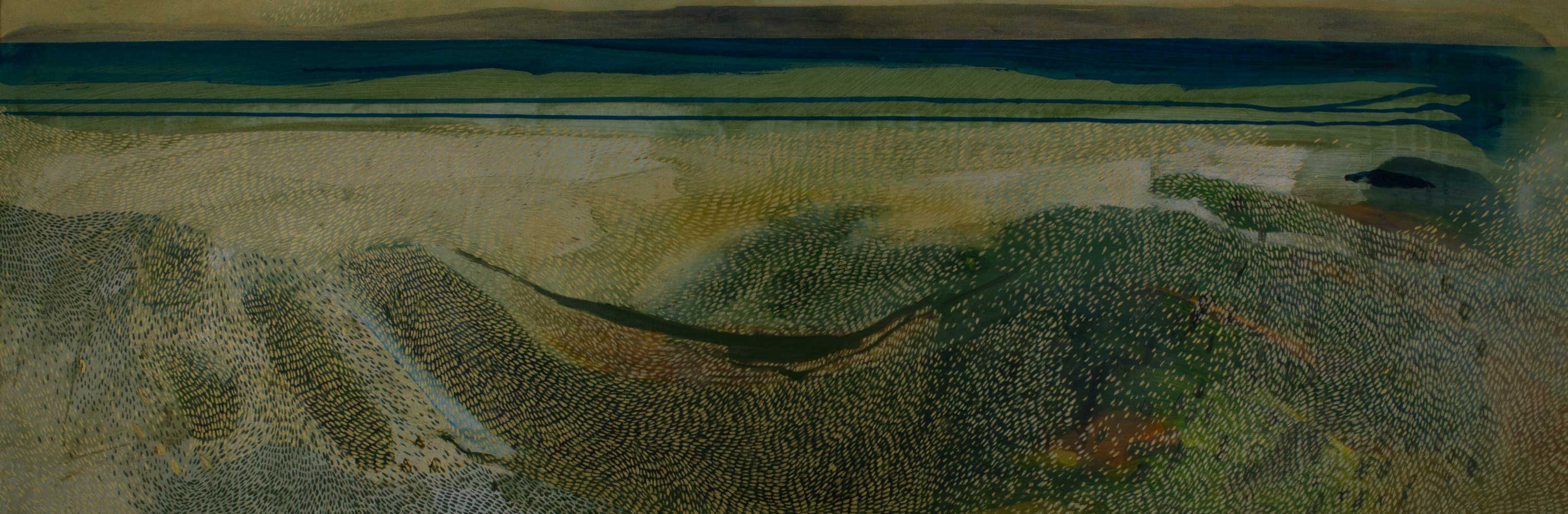
With this support, it allows me to continue. To keep painting and loving our landscape. Thank you.
Limro is on display until the 24th November, please share with folk you know in the area. I you can’t make it in person, it can be view online here. Enjoy!
 Laura Drever
Good afterno
LikeLiked by 1 person